Four pots of childcare money. Only one pays for a holiday camp
14 Sep 26 •
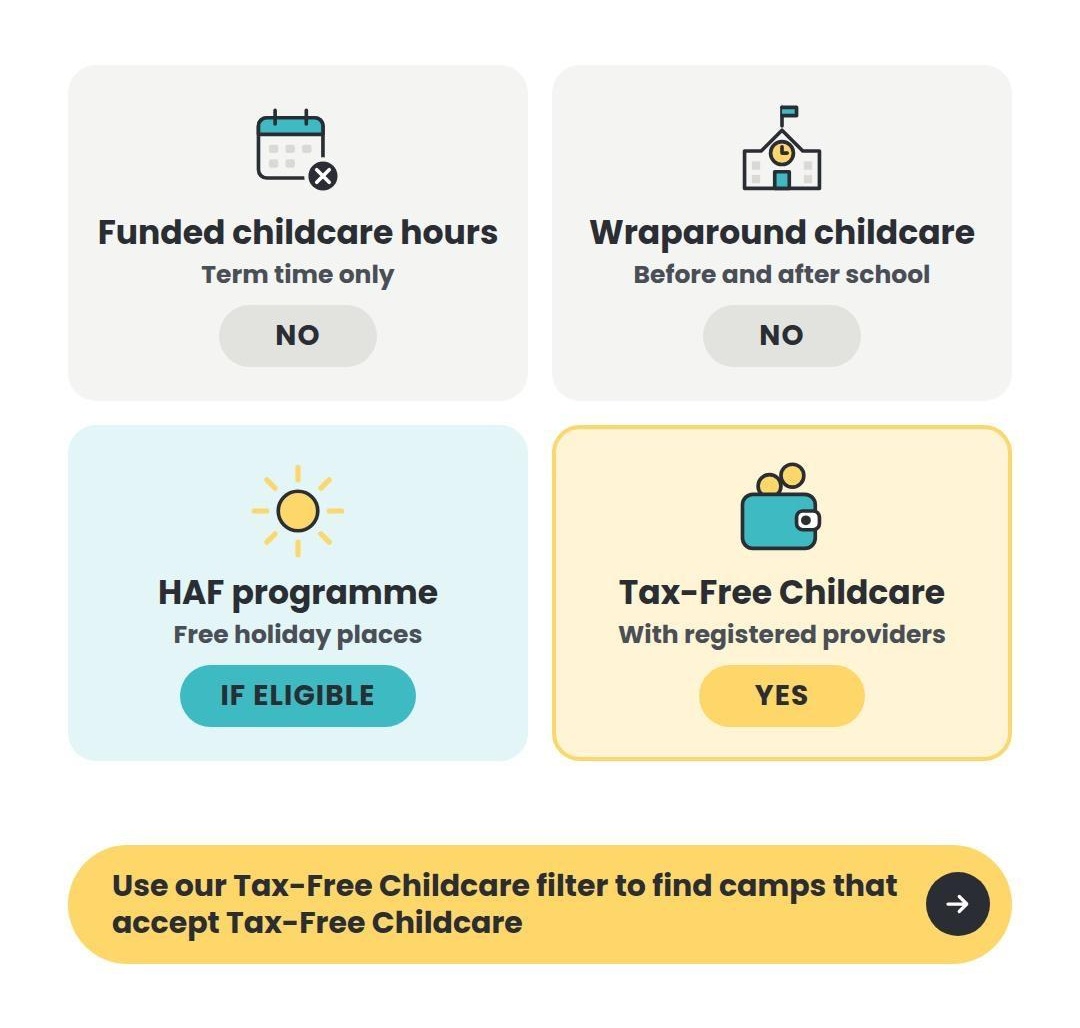
A guide to school holiday childcare
School closes for thirteen weeks a year, while statutory annual leave is 5.6 weeks. For most working parents, the gap needs filling.
Childcare support in England has grown considerably since 2023, but most of it covers term time. The holidays remain largely unsupported. Here is how to make the most of what is available.
1. Start with free provision
HAF (Holiday Activities and Food) provides free holiday clubs with meals and activities. It is aimed mainly at children eligible for free school meals, although councils can offer some places more widely. Places are limited and booking opens a few weeks before each holiday, so search your council’s name plus “HAF” well in advance.
Breakfast and after-school clubs run in term time only, but they reduce the leave you need during term, leaving more available for the holidays. Over 121,000 new wraparound places have been created, so it is worth checking again if you last looked some time ago.
2. Open a Tax-Free Childcare account
This offers the greatest saving. For every £8 you pay in, the government adds £2, which is 20% off. The limit is £500 per child per quarter (£2,000 a year, or £4,000 if your child is disabled), and support continues until the September after your child turns 11 (16 if disabled).
It covers holiday camps, play schemes and before- and after-school clubs, not just nurseries. A £220 week of camp costs you £176. Almost 75,000 providers accept it, families save an average of nearly £100 a month, and setup takes around twenty minutes on gov.uk.
Points to be aware of:
Your quarter runs from the date you applied or last reconfirmed, not the calendar quarter.
Reconfirm every three months. If you miss it, the account is paused.
Top up in advance. Payments take a few days to clear.
It cannot be combined with childcare vouchers or the Universal Credit childcare element. On Universal Credit you can reclaim up to 85% of costs, which is usually the better option, so compare both.
3. Be aware of the £100,000 threshold
If either parent’s adjusted net income exceeds £100,000, the household loses both Tax-Free Childcare and funded hours entirely. There is no taper. Adjusted net income is taxable income after pension contributions and Gift Aid, so pension salary sacrifice can reduce it.
We are an activities marketplace, not financial advisers. If you are close to the threshold, we recommend speaking to an accountant.
4. Book in this order
Check your council’s HAF dates and your eligibility.
Top up your account so the funds have cleared.
Confirm the camp accepts Tax-Free Childcare. Providers must be approved childcare, normally Ofsted-registered in England, and signed up with HMRC. Most established camps are, but some smaller providers are not, so ask before booking.
Book. October half term places are already filling.
Search camps across London and the South East at yellowdays.com, filtering by age, activity and date. Every provider agrees to our Safety Charter, a set of standards inspired by Ofsted’s safeguarding and welfare guidelines.
Quick answers
Can I use funded hours for a holiday club? No. They cover term-time provision for under-fives.
Can I use Tax-Free Childcare for holiday camps? Yes, if the camp is approved childcare and registered to receive payments.
Does Tax-Free Childcare stop at school age? No. It runs until the September after your child’s 11th birthday, or 16 if disabled.
Does wraparound care run in the holidays? No, it is term time only.
Who can get HAF? Mainly children eligible for free school meals, though councils can allocate some places more widely.